Surface Dissolution Imaging Assay (Compact Flow Cell) Assay – PION

Brand:

Category:

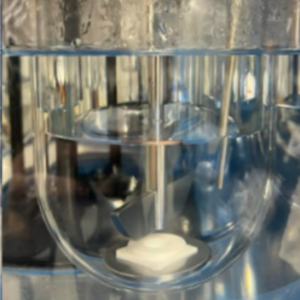
The miniaturized SDi2 (Surface Dissolution Imaging) platform, is used to record images of the dissolution process at the surface of the compact and is able to rankorder IDR (μg/min/cm2) and visualise the dissolution of
APIs and salts during early development.

The Intrinsic Dissolution Rate (IDR) is a measure of the rate of dissolution of a pure active pharmaceutical ingredient (API) where the conditions of surface area, temperature, agitation/stirring speed, medium pH and ionic strength are all kept constant. A well-defined surface area is presented to the dissolution medium by preparing a flat tablet disc of specific size. IDR is important during the development of new drug molecules as it is possible to predict potential problems using small quantities of material. It has applications in evaluating drug solubility in accordance with the biopharmaceutics classification system (BCS), comparison of the dissolution rate during salt selection or polymorph screening to choose the best candidate, and setting specifications for particle size in order to achieve complete dissolution of the required dose within the typical gastrointestinal transfer time. IDR imaging can be applied to promising drug candidates to guide early development efforts to improve a drug’s in vivo characteristics.

Key Deliverable

A full study report is provided. Reports include: sample and customer details, the IDR (mass/time/area) for each sample for the chosen buffer system, images of the dissolution process and statement of methodology.

Benefits

  • High-resolution imaging alongside drug release profiles.
  • Troubleshoot or refine formulations to obtain desired release behavior.
  • Gain an understanding of how the physical behavior of samples impacts drug release.
  • Visualization of physical phenomena in real time.
  • Compact flow cell, Raman compatible
  • Dual wavelength capacity.

Flow through dissolution system with high resolution, visible, and UV imaging technology providing insight into the physical dissolution behavior of drug products

Understand the mechanism of dissolution from drug substance and full dosage forms with high-resolution imaging alongside drug release profiles. Troubleshoot or refine formulations to obtain desired release behavior and gain an understanding of how the physical behavior of samples impacts drug release.

The SDi2 simultaneously captures both ultra-violet and visible surface imaging, capturing dissolution as it happens. The SDi2 generates high-resolution 2-D videos that show these dynamic processes in real-time Reviewing the videos allows scientists to gain a full understanding of exactly what’s happening as the sample dissolves providing insights that cannot be obtained using conventional dissolution methods.

Integrated fluidics and two distinct flow cells allow the study of a range of dosage forms and sample types with automated control and switching of up to two dissolution media in a single assay.
PRODUCT VIEWED

The Oxipack Vacuum-Sealed Leak Tester (VSLT) is specifically designed for detecting leaks in vacuum-sealed packaging, ideal for products like vacuum-packed sausages. It can test packaging immediately after production, identifying even the smallest micro leaks. The VSLT is particularly useful in the meat industry, where leak detection is crucial for product quality and shelf life. The machine features a built-in vessel and vacuum pump, creating a deep vacuum in a small measuring space around the packaging. This enables the VSLT to detect both micro and larger leaks in a non-destructive manner. Additionally, its capacity to test various packaging shapes and sizes, thanks to customizable inserts, makes it a versatile and essential tool for quality assurance in vacuum-sealed products.

The EOLO digital air jet sieve shaker has been specially designed for dry granulometric testing, for fine particles from 5 microns in size (from 0.005 to 4 mm). It offers fast, effective sieving thanks to the flow of the product obtained forced by a current of air which forces the particles through the sieve. This effect is obtained using an industrial vacuum which maintains constant depression.

The Oxipack Can Leak Tester (CLT) is a versatile solution designed for testing various types of cans, including metal and composite carton cans, with or without paper labels. Utilizing the vacuum decay method for leak testing, the CLT's patented, FDA-approved flexible membrane is pre-formed to match the shape of the packaging. This design allows for creating a small measuring space around the packaging and a deep vacuum in the test chamber, ensuring the protection of seals and contents.

DACHTEST Online Machine Vision Foreign Object Testing System uses high-speed cameras and intelligent image analysis to detect unwanted particles or contaminants inside packages in real time. Designed for inline inspection, it ensures product purity, safety, and consistent quality without interrupting production. VisionScan-XB200 Online machine vision foreign object testing; Various types of flexible transparent infusion bags,...

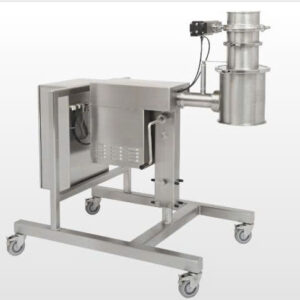
The Underdriven Comil® cone mill by Quadro is an advanced powder milling solution, featuring a compact design with the milling head positioned below the equipment. This mill is suitable for diverse industrial applications, offering flexible integration into existing processing lines, precise particle size control, and significantly enhanced productivity compared to traditional milling equipment. The Underdriven Comil® cone mill utilizes interchangeable milling heads, catering to various production scales, from laboratory and pilot-scale operations to large-scale manufacturing processes.

The Overdriven Comil® Cone Mill is a high-efficiency powder milling solution, originally invented by Quadro in 1976, specifically designed for particle size reduction, deagglomeration, dispersion, bulk density adjustments, separation, and recycling of powdered materials. This cone mill offers a simple, cost-effective design that reduces operational and maintenance costs while providing exceptional performance. It can be flexibly integrated into production lines ranging from research & development (R&D) to large-scale industrial manufacturing.